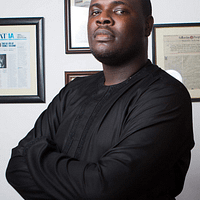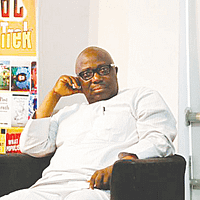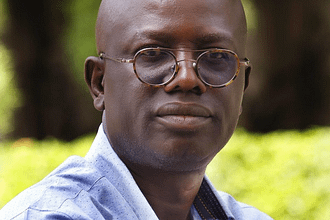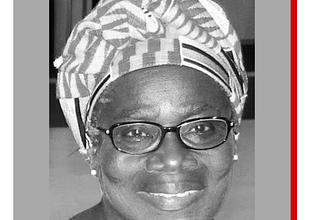


























































Theoreticians, public intellectuals, legal scholars, and policy thinkers whose works interrogate constitutionalism, electoral transitions, and the evolution of democratic institutions in Nigeria and Africa. Through scholarship, commentary, and advocacy, these writers provide rigorous analyses of democratic deficits, institutional weaknesses, and pathways toward strengthening governance, the rule of law, and citizen participation. Their writings have become indispensable resources for understanding the promises, contradictions, and future of democratic governance on the continent.
1. Jibrin Ibrahim
Professor of Political Science and Senior Fellow at the Centre for Democracy and Development (CDD), one of West Africa’s foremost policy think tanks. He holds a PhD from the University of Bordeaux, France, and has authored numerous books and scholarly papers on electoral integrity, democratic regression, and structural federalism. His major contributions include in-depth studies of Nigeria’s 2007 elections and broader democratization processes across Africa.
Ibrahim served on the Nigerian Electoral Reform Committee, chaired the Global Call to Action Against Poverty (GCAP), and continues to write influential columns critiquing the absence of a functional party system and the steady erosion of democratic gains in the Fourth Republic. His scholarship consistently emphasizes citizen mobilization, social justice, and the political economy of poverty reduction, making him one of Nigeria’s most important voices on democratic governance.
(He was featured in Writertain Creatives’ Top 25 Nigerian Essayists as one of the country’s leading voices on democracy, constitutionalism, elections, and political institutions.)
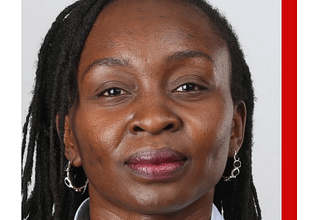
2. Ayisha Osori
Corporate lawyer, activist, and author of the acclaimed book Love Does Not Win Elections (2017), a forensic insider account of party primary corruption, godfatherism, and the structural barriers preventing credible candidates from entering politics. Drawing from her own experience of contesting for a National Assembly seat under the People’s Democratic Party (PDP), Osori delivers a rare, humorous, and hard-hitting examination of money politics, violence, and exclusion within Nigerian party structures.
Beyond her literary contributions, she is a development strategist whose work focuses on gender equity, democratic participation, and electoral reform. Her writings advocate for internal party democracy and greater inclusion of women and young people in political processes, offering both diagnosis and practical pathways toward political renewal.
(Ranked number two in Writertain Creatives’ Top 25 Nigerian Essayists for her transformative work on democracy, gender, electoral politics, and constitutional reform.)
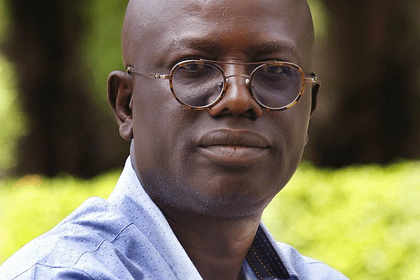
3. Chidi Odinkalu
Professor of Practice in International Human Rights Law at The Fletcher School, Tufts University, and former Chairman of Nigeria’s National Human Rights Commission. A prolific columnist and legal scholar, Odinkalu’s essays and reports explore judicial accountability, constitutional compliance, human rights frameworks, and the enduring legacies of militarism in Nigeria’s democratic experience.
He has litigated before regional human rights courts, advised international organizations, and chaired Nigeria’s Truth, Justice, and Peace Commission. His writings consistently challenge executive overreach, police abuses, and democratic backsliding, while advocating transitional justice mechanisms to address conflicts, including those in Southeast Nigeria. Through his scholarship and public interventions, Odinkalu has become one of Nigeria’s most incisive critics of authoritarian tendencies within democratic systems.
4. Idayat Hassan
Associate Fellow at Chatham House and former Director of the Centre for Democracy and Development (CDD) West Africa. She writes extensively on democratic security in West Africa, electoral integrity, digital disinformation, deepfakes, and the manipulation of electoral processes through technology.
Her research offers critical insights into safeguarding democratic institutions against hybrid threats, including propaganda networks, foreign influence campaigns, and election-related violence. Widely regarded as one of Africa’s leading experts on technology and democracy, Hassan’s work has significantly shaped contemporary understanding of how digital tools can both strengthen and undermine democratic processes.
5. Chris Akor
Political analyst and columnist for BusinessDay newspaper. His essays provide sharp examinations of institutional mimicry, accountability deficits, and the structural weaknesses embedded in Nigeria’s constitutional design.
Akor frequently interrogates power dynamics, governance failures, and the challenges of sustaining democratic rule within a context marked by elite predation and weak institutions. Through accessible and incisive commentary, he exposes the disconnect between constitutional ideals and political realities, contributing significantly to public understanding of governance and democratic reform.
6. Omano Edigheji
Political scientist, policy analyst, and author with a PhD in Political Science from the Norwegian University of Science and Technology. He has served in several advisory capacities, including as Special Adviser on Research to the Governor of Kaduna State.
Edigheji’s comparative scholarship examines democratic transitions, institutional development, and the concept of the democratic developmental state in Africa. His publications focus on state capacity, governance, and socio-economic transformation, drawing lessons from successful developmental models around the world. His work argues that democratic institutions and developmental outcomes are mutually reinforcing and that state effectiveness is indispensable to democratic consolidation.
7. Ayo Obe
Human rights lawyer, columnist, and veteran pro-democracy activist. Former President of the Civil Liberties Organisation (CLO), she has remained a consistent and influential voice on legal reform, constitutional rights, electoral monitoring, and justice.
Obe played significant roles in the struggle against military dictatorship and was a prominent advocate for the actualization of the June 12, 1993 election. She has served on bodies such as the Nigeria Transition Monitoring Group and the Police Service Commission. Her writings underscore the importance of citizen agency, constitutionalism, and the protection of democratic gains, particularly in periods of political uncertainty.
8. Adebayo Williams
Renowned intellectual, essayist, scholar, and novelist, widely regarded as one of Africa’s finest prose stylists and public intellectuals. With a distinguished background in African literature, he has produced more than a thousand publications, including several award-winning works.
His columns and essays examine the lingering psychological and institutional shadows cast by military rule on Nigeria’s democratic order. Combining wit, erudition, and moral clarity, Williams offers incisive critiques of power, governance, and society, making him one of the most compelling interpreters of Nigeria’s democratic contradictions.
9. Sam Amadi
Legal scholar, former Executive Chairman of the Nigerian Electricity Regulatory Commission, and Director of the Abuja School of Social and Political Thought. His writings focus on constitutional democracy, institutional design, public policy, and regulatory governance.
Amadi consistently argues that strong and independent institutions are the indispensable foundations of democratic practice and sustainable economic development. Through his essays and public commentary, he explores the relationship between governance reforms, state capacity, and democratic accountability.
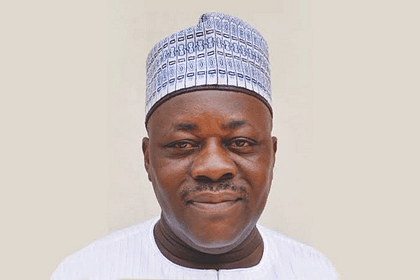
10. Auwal Yadudu
Professor of Law and constitutional law expert, currently serving as Vice Chancellor of the Federal University Birnin Kebbi. Formerly Dean of Law at Bayero University and legal adviser to General Sani Abacha, Yadudu’s essays and commentaries examine judicial independence, executive compliance with constitutional provisions, federalism, and the legal precedence of the 1999 Constitution.
He has defended the existing constitutional framework against radical restructuring proposals and contributed extensively to national conversations on law, the judiciary, and human rights. His work remains significant for understanding constitutional interpretation and the continuing debates surrounding Nigeria’s federal structure.
Conclusion
Collectively, these writers provide the intellectual scaffolding for understanding and reforming Nigeria’s democratic experiment. Their works blend theory, empirical analysis, legal reasoning, and practical advocacy to address recurring challenges such as electoral fraud, institutional fragility, democratic backsliding, and the persistent tension between constitutionalism and political reality.
Through their scholarship and public engagement, they continue to shape national conversations on governance, citizenship, and institutional reform. In a political landscape where democratic gains remain contested and incomplete, their writings serve as both a historical record and a roadmap for building stronger, more accountable, and more participatory democratic institutions in Nigeria and across Africa.